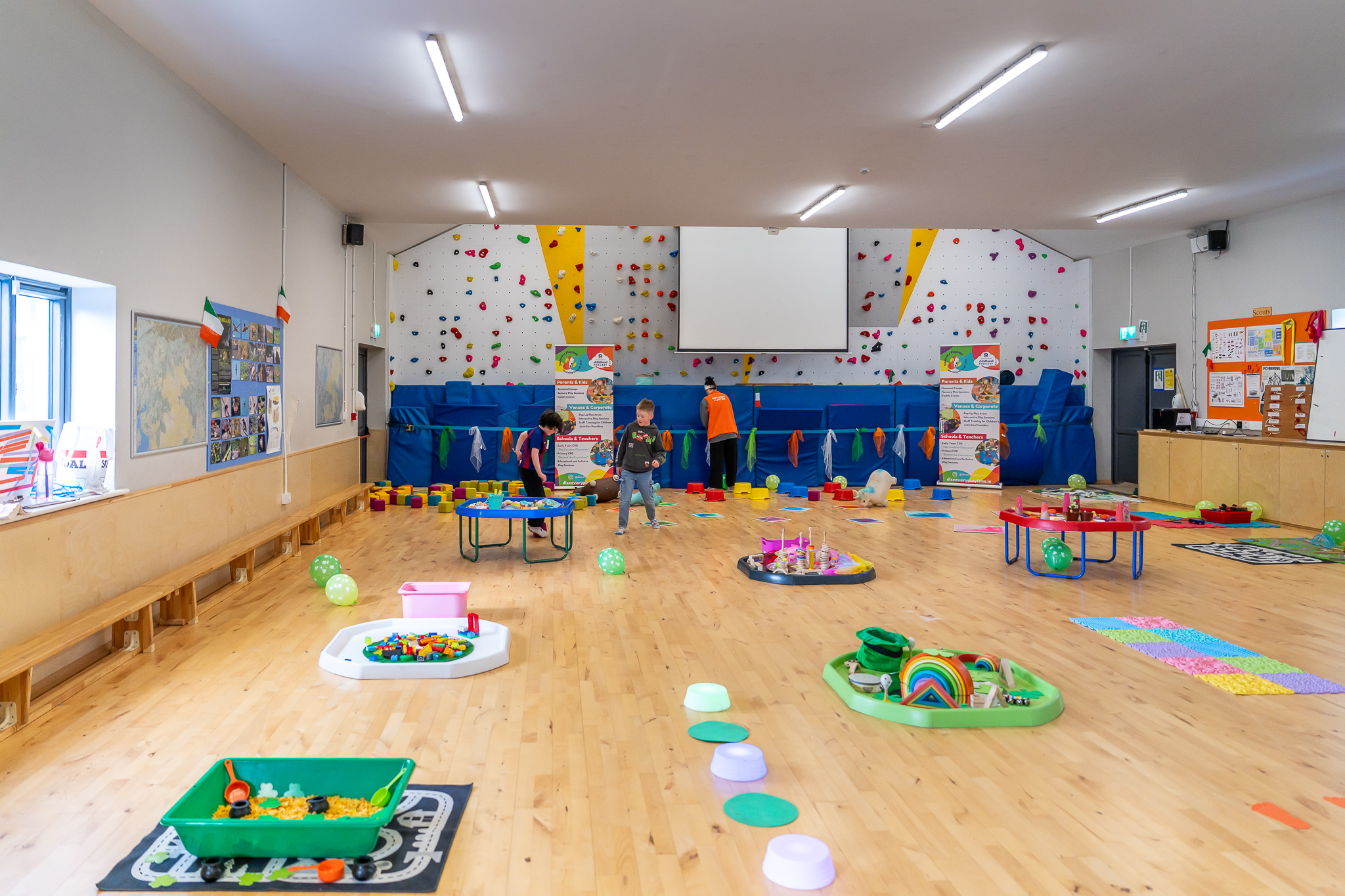
Beyond the Kids’ Corner: What Does It Mean to Have a Family-Friendly Event?
Put out a colouring table, add a few toys and you have a children’s area. But does that make an event, hotel or organisation truly family-friendly? Not necessarily.
When we create spaces for children, we have an opportunity to do much more than keep them entertained while the adults get on with something else.
We can create environments where children feel welcome, curious and confident enough to explore, while giving families the opportunity to connect and enjoy the experience together. And often, the difference is not about having more. It is about understanding children better.

The environment matters
Children are constantly responding to the environments around them. The resources we choose, how we present them, the amount of freedom children have and even the role the adults take can completely change how a child engages. At Discovery Playtime, we see this every day.
Give children an environment that sparks curiosity and suddenly a simple collection of materials can become a laboratory, a construction site, a small world, an artwork or something we never imagined at all.
That last part matters. We don't always need to decide what children should create before they begin. Sometimes our role is simply to create the right conditions and allow them to show us what is possible.

Play is doing far more than we can see
This philosophy sits at the heart of our
Play for Growth Framework developed by Mireia Lopez founder of Discovery Playtime, which looks at how playful experiences support children's holistic development across six interconnected areas: physical, cognitive, communication, social, emotional, creative and the developing sense of self.
A child building isn't just building. They are problem-solving, experimenting, developing coordination, making decisions and persisting when something doesn't work. A child engaged in sensory play may be exploring texture and cause and effect while developing language, creativity and emotional regulation.
Children creating something together are also negotiating, communicating, sharing ideas and learning how to be part of a group.
The activity is what we see. The development happening underneath it is where the real value lies.
What does this mean for family-friendly organisations?
Whether you are designing a hotel experience, conference, festival, family day, community programme or workplace event, children's provision shouldn't be an afterthought.
Ask different questions. Instead of “What activities can we give the children?”, ask:
“What experience do we want children and their families to have here?”
Can children move? Can they create? Can they explore? Can they make choices? Can different ages and developmental stages engage in different ways? Can parents participate rather than simply supervise? Does the environment communicate to children: you belong here too?
When we start with those questions, children's spaces become something very different. And importantly, so does the experience for the whole family.

Creating spaces where childhood belongs
At Discovery Playtime, our work has grown far beyond delivering children's activities.
We work with hotels, schools, libraries, organisations and communities to create meaningful play experiences and environments grounded in an understanding of how children actually learn and develop.
Through family events, children's workshops, Play for Growth programmes, staff training and educational consultancy, we help organisations move from simply providing activities to intentionally creating experiences that support children and the adults around them.
We also collaborate with partners such as Clever Kids to help settings access carefully considered play and educational resources, while conversations through the Rediscovering Childhood podcast continue exploring what children need to thrive in the world they are growing up in.
Because becoming child-friendly isn't about adding more toys. It starts with understanding childhood. And when we understand how children play, learn, connect and develop, we can create spaces where children don't simply have something to do.
They feel that they belong.
To explore Discovery Playtime workshops, training, consultancy, family experiences or support with developing your play environment, get in touch with the Discovery Playtime team.
