
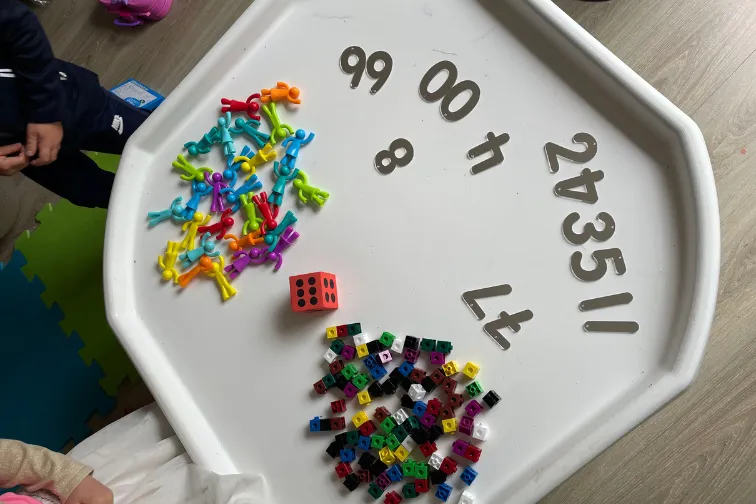
Maths Through Art
Maths Through Art: Bringing the New Primary Mathematics Curriculum to Life
What if bringing the new Primary Mathematics Curriculum to life didn't always mean finding another maths activity? What if mathematical learning was already happening while children were building, designing, drawing, comparing, experimenting and trying to make their ideas work?
For Maths Week this October, we're exploring Maths Through Art - Makers Style. One of the things we see again and again through our Discovery Makers workshops is that when children are given the freedom to create, an incredible amount of mathematical thinking happens naturally. Sometimes, the biggest opportunity isn't to add more maths - it's to become better at noticing the maths that is already there.
Maths is hiding everywhere in children's creations
Think about a child trying to build a structure from cardboard and recycled materials. They might compare lengths, consider which shapes will fit together, work out how many pieces they need and experiment with position, height and balance. Another child might create a repeated design, sort materials according to their own criteria or discover that something needs to be twice as long for their idea to work.
None of these children necessarily think they are 'doing maths'. They are trying to solve a problem that matters to them, and mathematics becomes one of the tools they use to do it. The Primary Mathematics Toolkit shows just how broad mathematical learning is, with five interconnected strands: Number, Algebra, Shape and Space, Measures, and Data and Chance, covering areas such as patterns, measuring, spatial awareness, shape, transformation, sets and operations, fractions and more.
When we begin to look at children's creative work through that lens, we start to see mathematical possibilities everywhere.
Art and maths don't need to live in separate boxes
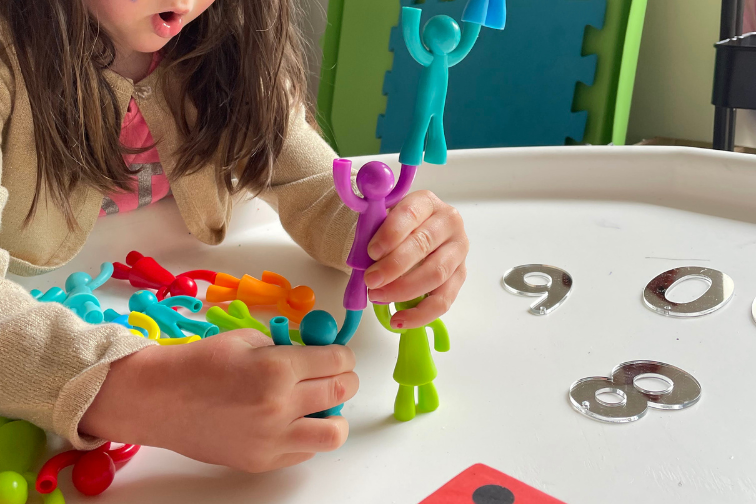
We often separate subjects because that's how curriculum documents and timetables need to organise learning, but children don't necessarily experience learning that way. When a child designs, builds or creates, they may be using artistic thinking, mathematical thinking, scientific thinking, language and communication skills simultaneously.
Imagine a child creating a sculpture. They're making decisions about shape, size, position and proportion. They may need to measure, compare, count or create a pattern, and if the structure falls over, they suddenly have a new problem to investigate. Maths isn't something we need to add to the artwork afterwards; it's already part of the process of bringing the child's idea to life.
The adult's role can be surprisingly simple
This doesn't mean turning every creative experience into a maths lesson or interrupting children's play with constant curriculum questions. Instead, we can begin by observing: What is this child interested in? What problem are they trying to solve? What mathematical thinking is already happening here?
Then, at the right moment, one thoughtful question can extend that thinking. We might ask, 'How could you find out which one is longer?' 'What do you notice about your pattern?' or, when a structure keeps falling, 'What do you think is making that happen?' The question isn't designed to lead children towards our answer; it's there to help them investigate their own idea more deeply.
When maths has a purpose, it becomes meaningful
Imagine a child decides to build a bridge between two tables. We could tell them how long the space is and give them the materials they need, or we could become curious alongside them: How far does your bridge need to reach? How could we find out? Is this piece long enough? What could we use to measure the gap? What might you change?
Now measurement has a reason. The child isn't measuring because an adult has told them that today's learning objective is measurement; they're measuring because their bridge needs to reach the other side. That context gives mathematical thinking a real purpose and allows children to experience maths as something useful rather than something that exists only on a page.
A simple Maths Week idea you can try in your classroom
You don't need an elaborate activity to experiment with this approach. Create a small Maths Makers area using open-ended materials you already have: cardboard, tubes, bottle tops, craft sticks, string, paper, tape, containers, recycled materials or loose parts and offer one simple invitation:
Can you create something that stands by itself?
Don't show children an example of what they should make. Allow them to decide what the invitation means and how they want to approach it, then observe what emerges. One child may become interested in height and measurement, another might investigate shapes and stability, while someone else might count how many pieces they've used, compare sizes or discover a pattern.
The invitation is the same, but the mathematical learning can take many different directions. And you don't have to capture every possible curriculum connection. Follow the mathematics that becomes meaningful to the child.
Maths through art can start with something very simple
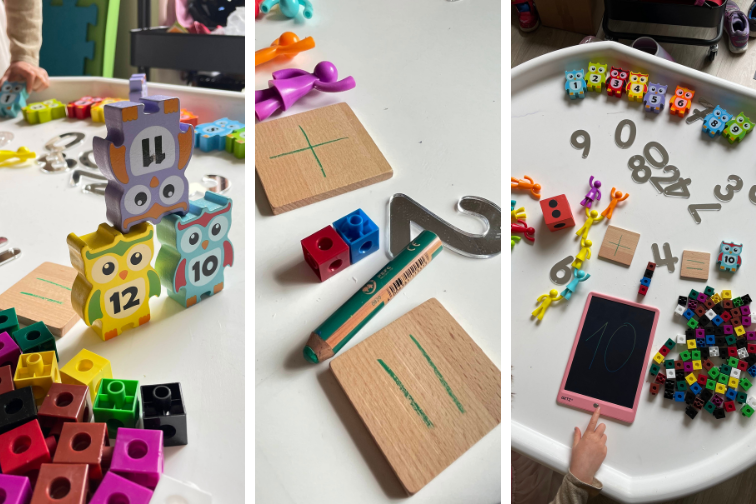
Take pattern, for example. Provide paper, paint, loose parts or collage materials and invite children to create a pattern of their own rather than asking everyone to reproduce the same predetermined pattern. Then become curious about what they've created. What is repeating? What might come next? Could someone else work out the rule? Could the pattern grow? Could they create the same rule using completely different materials? The artwork remains theirs, while the conversation naturally introduces mathematical language, reasoning and relationships.
The same approach can open opportunities to explore shape, symmetry, size, comparison, position, number, measurement and spatial awareness. The important part is that the mathematical conversation grows from what the child is actually doing rather than the creative experience being designed simply to produce one predetermined mathematical outcome.
This is what we explore through Discovery Makers
In our Discovery Makers school workshops, we transform the classroom into an open-ended Makers Studio filled with materials and possibilities but no example to copy and no predetermined 'right' outcome. Children decide what they want to create, choosing materials, developing ideas, making predictions, building, testing, noticing what happens, adapting their approach and trying again.
Our facilitators don't take ownership of that process. We observe, listen and use carefully chosen questions to help children think more deeply about what they are discovering. That might lead to mathematical thinking, science, language, art or another curriculum area entirely and often, it moves naturally between several because children's thinking doesn't happen in subjects.
Supporting teachers to see the learning too
One of the most important parts of bringing Discovery Makers into schools is supporting the adults in the room too. We want teachers to begin seeing what we're seeing: when a child is trying to make two materials connect, what learning is happening? When they change their design because it won't balance, what skills are developing? When children compare approaches or explain why they think something will work, what curriculum connections are emerging?
Through our school programmes, teachers can explore observation, adult-child communication, child-led learning and the role of questioning, alongside practical ways to recognise and extend curriculum learning through children's interests, play and making. The aim isn't simply to deliver a great workshop and leave; it's to help teachers take some of these approaches back into everyday classroom practice so the impact continues long after the Discovery Makers session is over.
Perhaps implementing the new curriculum isn't always about doing more
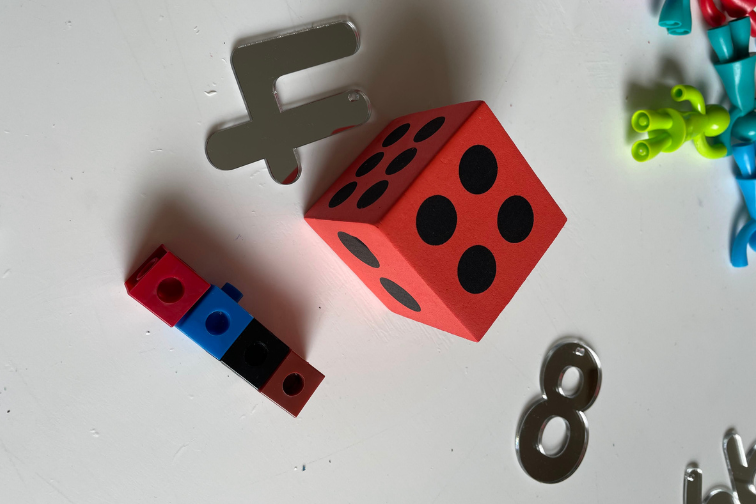
Teachers already have enormous demands on their time, and a new curriculum can understandably feel like another thing to plan, resource and fit into an already busy school day. But perhaps there is another way to look at it. Instead of always asking, 'What activity can I do to teach this?', sometimes we can ask, 'Where is this learning already happening, and how could I help children go deeper?' The maths might be hiding inside a cardboard construction, a painting, a repeated design, a tower that keeps falling down or a child trying to work out how much string they need. When we give children interesting materials, enough time to explore and adults who are genuinely curious about their thinking, curriculum opportunities begin to emerge everywhere.
And perhaps that's one of the most exciting possibilities within the new Primary Mathematics Curriculum: helping children experience maths not simply as something they need to learn, but as something they can use to explore, question, create, solve problems and understand the world around them.
Bring Discovery Makers to your school
Discovery Makers creates creative, child-led, curriculum-connected workshops where children have the freedom to imagine, experiment, problem-solve and trust their own ideas. While children are making, we're also helping teachers recognise the learning happening within that process and discover practical ways to extend it across the curriculum.
This Maths Week, let's discover the maths hidden in making.

Facebook
Instagram
LinkedIn
Youtube
WhatsApp